AI Code Ownership: No Vendor Lock-In, No Paywall
Base44 locks GitHub integration behind their $40/month Builder tier, and even then only frontend code exports. Backend logic, database schemas, and server-side code stay locked on Base44's servers permanently. Stop paying and you lose access to everything you built.
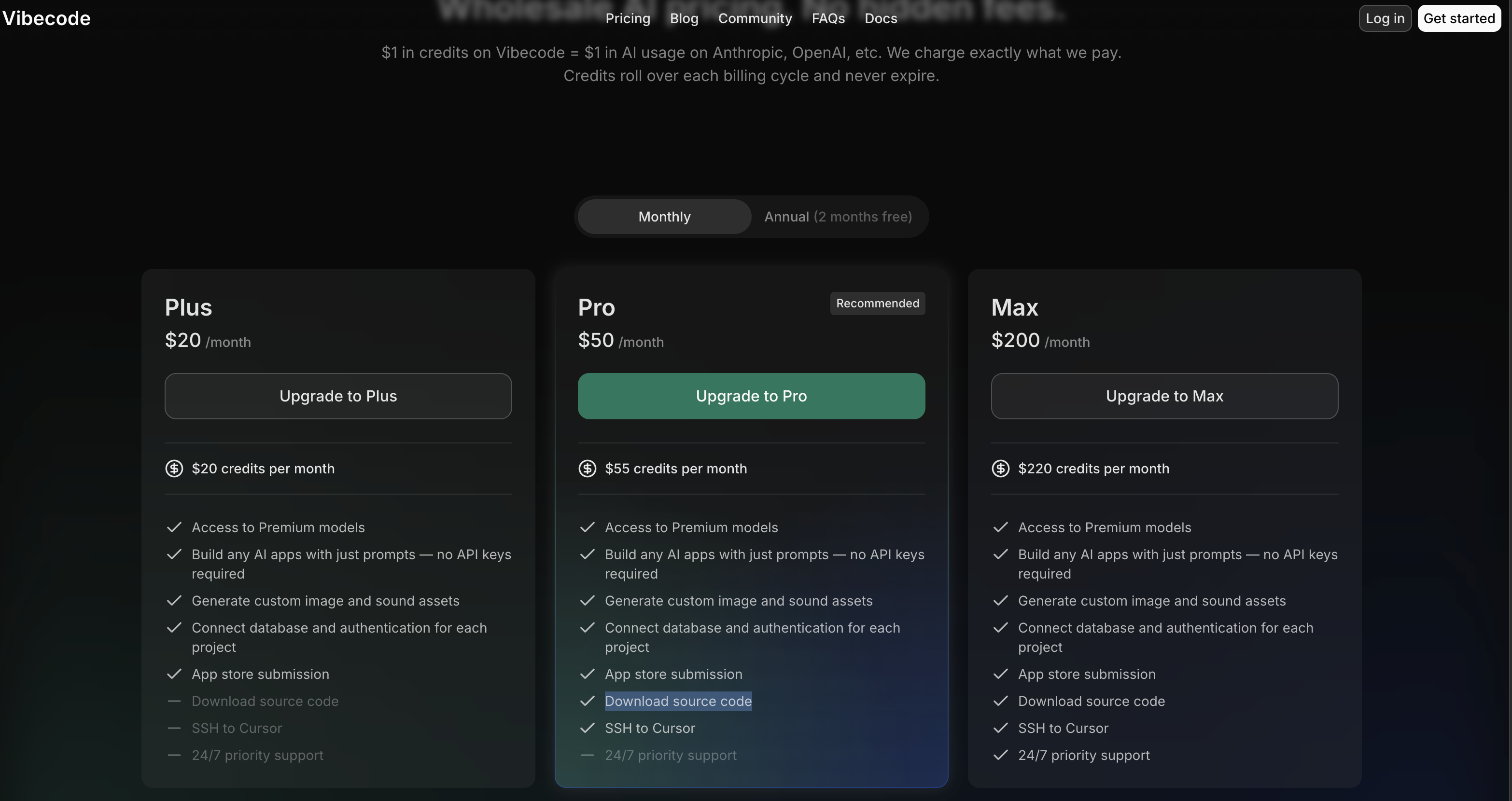
Code ownership shouldn't be a paid upgrade. The code was generated from your idea, your iteration time, your prompts. It should be yours from the start.
The lock-in playbook
Nobody advertises lock-in. It shows up as convenience: a managed database you can't export, a built-in auth system whose user table lives in a black box, a one-click deploy that only works on the platform that generated the code.
The pattern is always the same: remove complexity by removing your access to the underlying system. That works fine until you need to scale, change providers, hire a developer, or just stop paying.
A real GitHub repo from minute one
When you create a project on Appifex, the first thing that happens — before any AI writes a single line — is a GitHub API call to create a private repository.
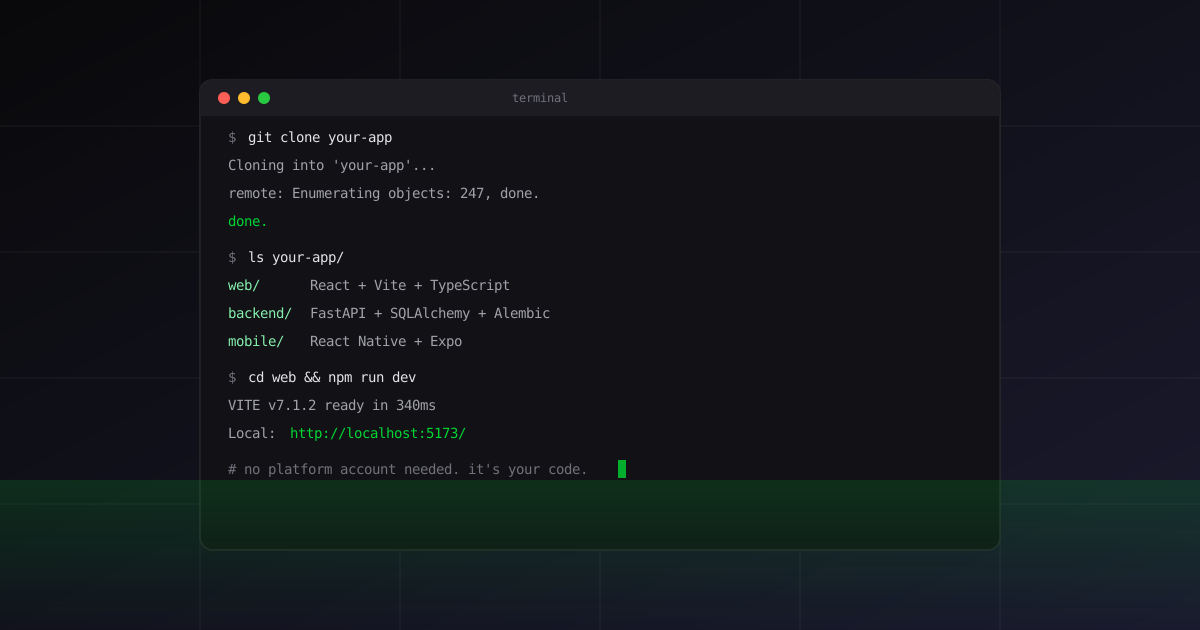
If you've connected GitHub, the repo goes straight into your personal account. If you haven't, it's created under an Appifex-managed organization and transferred to you the moment you connect. Either way, you can git clone it right now.
Every generation session creates its own branch. The AI commits and pushes, a PR opens targeting main, and you merge through the standard GitHub UI. Git is the source of truth. If Appifex disappeared tomorrow, your code would still be sitting in your GitHub account with full commit history.
Standard frameworks, no proprietary SDK
Open the generated project and you'll find tools you already know. Web: React 18 + Vite + TypeScript + Tailwind + shadcn/ui. Backend: FastAPI + SQLAlchemy + Alembic + PostgreSQL. Mobile: React Native + Expo + Expo Router.
The package.json scripts are what you'd write yourself:
{
  "scripts": {
    "dev": "vite",
    "build": "tsc -b && vite build",
    "lint": "eslint .",
    "preview": "vite preview"
  }
}
The backend entry point is a standard FastAPI main.py:
# app/main.py
app = FastAPI()
Every dependency is a public npm or PyPI package. No @appifex/runtime, no proprietary ORM, no custom shim. Run npm install && npm run dev for the frontend, pip install -r requirements.txt && python -m uvicorn app.main:app (or Poetry, or uv — your call) for the backend, and the app starts locally. No platform account required.
And when you're ready to ship, Appifex gives you one-click deploy to the cloud provider of your choice. Vercel, Railway, or Fly.io — you pick.
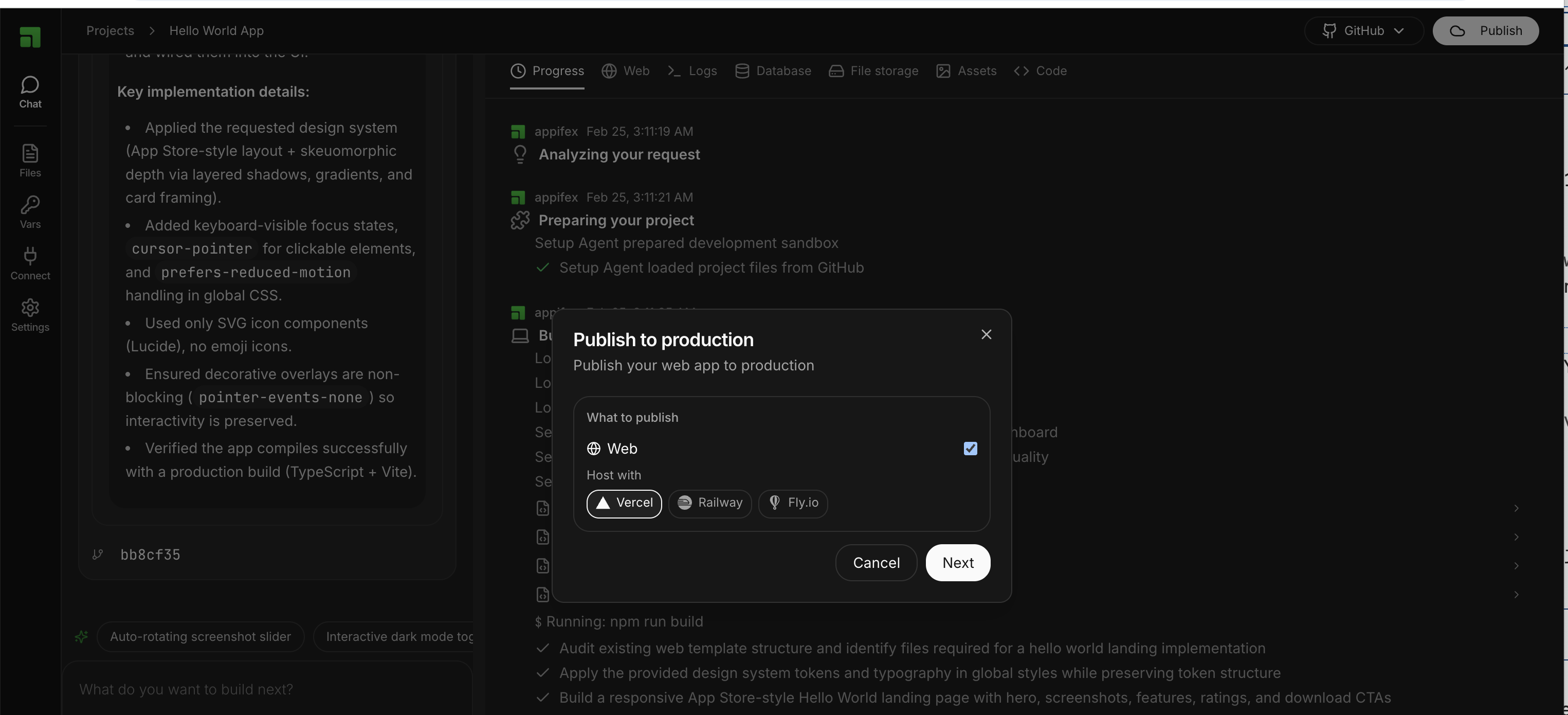
We recommend Vercel for most projects: generous free tier, no credit card required, more than enough capacity for prototyping and a reasonable number of real users. But the point is that you bring your own account. Appifex deploys to infrastructure you control, not infrastructure we control.
Deploy anywhere
Deployment targets are all standard providers you could set up yourself:
| Platform | Supported providers |
|---|---|
| Web | Vercel, Railway, Fly (AWS, Netlify, GCP coming soon) |
| Backend | Vercel, Railway, Fly (AWS, Netlify, GCP coming soon) |
| Mobile | Expo (EAS), App Store, Play Store |
Provider selection is a config choice at deploy time. The application code doesn't import anything provider-specific, so switching is a config change, not a rewrite.
Transfer and eject
If your project starts in our platform org, transferring it to your account is a single action. We push a clean snapshot to your GitHub, update references, and delete the platform copy.
After transfer, all subsequent sessions commit directly to your repo using your GitHub token. And if you stop using Appifex entirely, nothing breaks. Clone it, install dependencies, run the dev server. Hand it to a contractor. Open it in Cursor. It's yours.
The test is simple
Can you clone the repo and run it locally? Can you deploy it somewhere else? Can you hand the codebase to a developer who's never heard of your tool?
If the answer is no, you don't own your code. You're renting it.
We think the way to earn trust is to make leaving easy. The value Appifex adds is speed and engineering process, not captivity. Your code should outlast whatever tool helped you write it.
For the full architecture behind our generated code, read production-grade AI code. To see how the deployment pipeline works, read the setup fatigue problem. And for a side-by-side comparison with other AI builders, see Appifex vs Lovable vs Bolt.